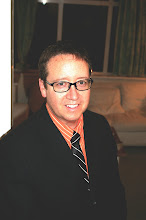
"News as Entertainment: The Rise of Global Infotainment" is the name of the new book from Daya Kishan Thussu. And Daya Kishan Thussu is the name of the University of Westminster professor who spoke yesterday to the Reuters Fellows. Just as one shouldn't judge a book by its cover, so one probably shouldn't judge a book by an hour-long seminar followed by an informal Q&A, and yet that's what I'm about to do.
Thussu isn't alone in his belief that television news--the main way the world finds out about itself--has become more concerned with entertaining its audience than informing it. It's a common trope. Thussu says that, owned by entertainment companies, desperate to hold dwindling audiences, eager to cut costs, news divisions have been lowering their standards, largely adopting the techniques of entertainment.
The world we live in is very different from the world that's depicted on TV news. "The world has very serious problems," he said. "Wars on TV are Hollywoodized. In the process we don't get the real picture." Thussu said that the "neo-liberal imperialism" of soft infotainment masks the reality of a troubled planet.
I had several reactions to this, the first of which was:
Mask away, baby! If what we see on TV news--which last time I watched included stories (non-Hollywoodized, in my opinion) about Iraq, global warming, genital mutilation, Darfur, dead dolphins and, yes, the occasional comic exploits of vapid celebrities--then someone's not doing a very good job of filtering out the death, despair and decay. I also wondered how his argument fares if audiences are still falling even though news executives have embraced softball journalism.
But what really confused me was that term "neo-liberal imperialism." I always thought imperialism was armies on a map, colonists on ships, administrators sweating in provincial capitals. I asked Thussu to clarify: Is neo-liberal imperialism the market? Does it mean allowing people to decide what they like to watch, whether it's a TV show on footballers' wives or a nature program about molluscs? Apparently it is the market.
I accept that global media has influence and that that influence may not always be a good thing. However, Thussu seems to be suggesting there is a specific mechanism by which western (mainly U.S.) media giants are seeking to pull the wool over the world's eyes. Bread, circuses, that sort of thing.
In his view, public service broadcasters such as the BBC are a bulwark against this creeping crapification. What's needed is global public service broadcaster, funded perhaps by a penny tax on each e-mail that's sent. How workable would that be? Here's your bill to support a Unesco-funded TV channel so we can bring you a program about unemployment in Chad.
The problem as I see it is that it's a short step from saying what people can watch to saying what people can't: No one's watching our story on Chadian unemployment! They're all watching "Hand Me the Defibrillator: TV's Funniest Onscreen Heart Attacks." Let's restrict their ability to do that.
What Thussu means, of course, is that there could be more, should be more, quality news programming. That's what he would like. I suppose I would like it too. But even a liberal like myself (I sometimes buy the Big Issue) believes that though the market may not be a perfect system, it's the best system we've got. Clunky as it is, it's preferable to a group of elites deciding what news would be good for me to consume.
And, lo! The market does seem to have hurled onto the beach something that would seem to fit Thussu's requirements. The web has made it possible for me to find news that, in his argument, the Rupert Murdochs of the world would like to hide from me. I can read foreign newspapers. I can sample foreign bloggers. I can access the fevered bleatings of various bloggers.
I agree with Thussu that journalism could be better. But I don't see its shortcomings as some sort of conspiracy. The media reflects the societies it covers while trying, in its imperfect way, to shine light into darkened corners. If some TV news program hasn't nailed down precisely how many Iraqi civilians have died in the war--80,000; one million; or something in between--could it be that this is a figure society (the market) isn't clamoring for?
It may be, as Thussu said, a chicken and egg argument: Do people become more interested in "important" news the more they're exposed to it? Or do we seek out that which we're interested in? Whichever it is, I'm uncomfortable with the notion that people make "wrong" choices and should be nudged in the "right" direction. I would call that neo-liberal totalitarianism.
The Aunt in the Attic
Well what about the BBC? The issue of whither the Beeb has felled more forests this year than a hundred Brazilian land barons. Thussu said he'd shudder to think what would happen to the respected current affairs program "Newsnight" if it had to compete on the open market, adrift from the safe bosom of the public service charter. I would say: Leave the BBC as it is. It may be a weird, anti-market anachronism, but you would have a tough time recreating its quality programming from scratch. Make it share its iPlayer on-demand technology with any other U.K. broadcasters who want it. (We all payed for it, after all.) But get it out of areas it seems to have no business being in. Travel books? Selling advertising on its international web site? What's that have to do with informing, educating and entertaining?
Showing posts with label television. Show all posts
Showing posts with label television. Show all posts
Thursday, 12 June 2008


Tuesday, 13 May 2008
Big Brother Is Watching You

It saves time when life imitates art. If you've read the book or seen the movie you don't find reality quite so surprising. Thus I find it helpful that England in 2008 is just like the England depicted in George Orwell's "Nineteen Eighty-Four."
"Dear Mr. Pritchard-Kelly" [sic] began the letter from Britain's TV Licensing authority. "We have been advised that you bought television receiving equipment in February 2008 from Dixons Stores Group. However, we have no record of a TV Licence in your name for the above address. Using TV equipment to watch or record television programme services without a valid licence is against the law."
"We have been advised." I love that. What you mean is you have your paws in all sorts of records that help to confirm whether or not residents own a TV and thus whether or not they have paid up so they can watch television legally. (Briefly, for those not living in the UK: Residents here pay a 140 pound annual licence fee that supports the commercial-free BBC.) For Valentine's Day My Lovely Wife bought me a Freeview box, a $40 device which allows us to pull in more than the five terrestrial broadcast channels.
You may be wondering whether this is an appropriate Valentine's Day present. I suspect it was designed to mollify our kids, who were starting to go into serious TV withdrawal. What's interesting is that the TV Licensing folks work every angle. They issued a special press release on Feb. 13, warning licence scofflaws that they faced capture on Valentine's Day. TV Licensing spokesperson Joanna Pearce said: "Getting a knock at the door from TV Licensing while you're trying to impress the object of your affection is likely to leave any would-be lover red-faced. At TV Licensing, we'd rather spare you your blushes, and are taking this opportunity to remind you that we'll be visiting unlicensed homes on Valentine's night like every other night."
TV Licensing catches about 400,000 people a year. Would I be one of them? No, because I'd paid our fee. I'd even considered framing the certificate that came in the mail. But it was lost among the piles of papers in our house. The second threatening letter came about 10 days later: "We still have no record of a TV Licence in your name." I dug out the proof of my law abidingness, called the Licence Confirmation Line and punched in my reference number, clearing my good name.
The Fixed Penalty Support Unit of the Thames Valley Police was the next government office to drop me a line: "In accordance with Section 1 of Road Traffic Offenders Act 1988, I hereby give notice that it is intended to take proceedings against the driver of motor vehicle AJ08GOU for the alleged offence of EXCEED 30 MPH .... This allegation WILL be supported by photographic evidence at any subsequent court hearing."
I had (allegedly) been photographed traveling 37 mph in a 30 mph zone in a rental car and the good people at Alamo had ratted me out. I don't doubt that I was speeding. The Vauxhall Vectra longs to run wild and free. But nowhere in the three pages (!) of material did it say how much my ticket would be. All the Fixed Penalty Support Unit cared about was getting my signature on a statement admitting that I was driving the car--mailed back, I should point out, in my envelope and at my expense.
I'm hoping I can avoid a fine by taking a safe-driving class. After all, you can study just about anything at Oxford.
Britain loves its CCTV cameras. I read somewhere that there's one camera for every 14 citizens. You'd think that with that sort of saturation coverage people wouldn't bother committing crimes and when crimes did occur they'd be solved quickly. But that isn't the case. A report last week revealed that only 3 percent of street robberies in London are solved by CCTV. One of the problems is that officers don't like the drudgery of flipping back through hours of video to see what they've caught there.
Maybe they should put the TV Licensing people in charge of that.
Wednesday, 30 April 2008
Sky Larking: Don't Adjust Your TV

My humble little blog doesn’t attract much attention. I like to think of it as appealing to a small but select readership, a readership that, to be honest with you, typically numbers in the low three digits—the very low three digits. Still, every writer dreams of a larger audience so when a producer from SkyNews asked me to appear on one of their programs, I had to say yes. She’d seen my Guardian essay and, given that she has the unenviable task of finding a new blogger to appear nearly every night, she’d asked me if I was game.
I was to appear on a segment that looks at stories that are “moving up the web.” I don’t know what particular criteria they use to select the stories—is the web vertical, up which things may move?—but I didn’t have to. They would provide me with five links, I’d look at them long enough to have a rough grasp of the topic, then I’d sit across from a presenter and blurb the sites while graphics played across TV screens around Britain. They’d also run my blog’s address, thus increasing the chances that some shut-ins might wash up here at Voxford.
I’ve been on American TV before (mostly the rarely-seen NewsChannel 8 but also, very early in my career, the CBS Evening News) but British TV was new territory. I spent 40 bucks of my own money and splurged on the fast train to Paddington, where a silver Mercedes sedan was waiting to whisk me to SkyNews’s west London headquarters.
The driver was from Iran. He was 15 when he left that country, traveling with a forged Yugoslavian passport and hoping to end up in the most Iranian of American cities, Los Angeles. (“Tehrangeles,” he called it.) But he was caught in Britain and this is where he’s been for the last 20 years. He said he’s never gotten used to the rain.
We had a lot of time to talk. Traffic was awful and it took us nearly an hour to navigate the drizzly back roads of London and arrive at Sky. A runner met me in the lobby and took me to the makeup room.
NewsChannel 8 doesn’t do makeup, so this was a first. Well, a first since my acclaimed performance in “You Can’t Take It With You” in 12th grade. “How long are you going to be on for?” asked the makeup lady. "Not long," I answered. "About three minutes." It turns out they don’t use the good airbrush-applied makeup if you’re only going to be on for three minutes. She used a camel’s hair brush, dabbing powder on my macrocephalic forehead until it had stopped shining like a signal mirror. She did my whole face—ears too.
“What’re you talking about?” she asked.
“Um, the web,” I answered.
“The world wide web? Oh, of course,” she said. “Today’s the 15th anniversary of when it was invented.”
Really? Somehow I’d missed that. Maybe that’d be good to work in, I thought. “Can I ask where you heard that?” I said, suddenly worrying that a SkyNews makeup lady might not be the best source.
“I saw it on TV somewhere,” she said.
I looked better with makeup on—not so shiny, little blemishes gone, my red and vaguely disturbing complexion obscured—but I’m not sure I approve of it. All the TV newsreaders in England—the white ones, anyway—look the same, with a sort of matte plastic appearance. I guess the viewing public would be horrified by a zit or the riverine sprawl of a varicose vein, but the makeup looks so fake that I have to wonder why they don’t just wear a kabuki mask.
Or use an avatar. See, the first story moving up the web was something about avatars. It was also the toughest one for me to explain, since I don’t really know from avatars and the story was based on some research at Stanford University, research described in a dense journal article I’d read on the train.
I went to the Green Room and re-read the notes—the script, really—that I’d written. How much detail should I go into? What if host Martin Stanford asked about the research methodology of the Stanford experiment? There was also an item on a huge pig balloon lost during an outdoor Roger Waters concert in California. I’d be okay if he asked what song had been playing when the balloon became untethered (“Pigs”) but I’d be sunk if he asked me to sing it or hum the melody. And no way could I pronounce “lysergic acid diethylamide”—aka LSD—the discoverer of which had just died.
The floor manager wired me with a microphone and escorted me to the set. I've learned a lot of things about TV and the most important one is that it's impossible for a newspaper person to look good on it. TV people sit with an erect carriage, they know how to hold their head and not to cross their legs. It's actually hard to do it right, which is why newspaper people look so awful. I am resigned to this and so I tried to get comfortable.
The other thing about TV--at least the sort I've been asked to do--is that it moves quickly. I'd barely gotten into the avatar item when it was time to move on to the dead LSD inventor. Oops, I'd forgotten to mention that the Stanford researchers call their theory the "Proteus Effect." Oh well. After LSD came Roger Waters's pig. I got my Obama joke in, but just barely. Barely time to address the Texas bonehead who tried to cash a $36 billion check or the Wisconsin paper that has migrated to the web.
One of the problems of going on TV is that TV people never seem to be paying attention to what you're saying. The same thing applies to radio. When I used to be on David Burd's WTWP program on Saturdays he was forever twisting dials, cueing up sound effects, seeing which callers were on hold--all while I was talking. Was he even listening? Yes, as it turns out. Martin was too, able to extemporize even though it seemed like he didn't even know I was there. This kind of multitasking is as vital to a TV person as knowing how to sit up straight.
And then it was over. The same Iranian driver whisked me back to Paddington and I boarded the 20:51 to Oxford. I arrived back home at 10 p.m., five hours after I'd left for my three minutes of television.
How did I do? See for yourself. The video isn't up yet, but it should be soon. And in the unlikely event that you've come to my blog because you saw me on SkyNews, thanks for making the trip.
Wednesday, 13 February 2008
Let the Sun Shine In

It's always sunny on British TV costume dramas, which gives one a rather skewed impression of this damp, sceptered isle.
The British love a good TV costume drama. Or even a bad one. They're so adept at producing them that a half-dozen seem to be on at any one time. No sooner had "Cranford" finished than "Lark Rise to Candleford" started up. The latest incarnation of "Robin Hood" has been heating up (or "hotting up," as the Brits say) the BBC air waves for the last few years. And just as the U.S. Strategic Air Command always has one nuclear bomber in the air, so does British television always have one Jane Austen adaptation in development.
Many of these shows feature the same actors: men who know how to use a plow and women who have a high tolerance for bonnets and a rib structure that allows for constant corseting. I sometimes wonder if being stuck in the 18th or 19th century is a kind of punishment, the modern workhouse. ("Madam, I find you guilty of driving under the influence and I hereby sentence you to a 12-part mini-series based on 'Jude the Obscure.'")
Still, we watch them all. The English are so very good at them. Actors are trained from a young age to keep a straight face while saying things like "That's a fine teacake you make, Mrs. Catchpole" and "But it's so dreadful, Charles; Ruby lost the antimacassar and now Tidgy shan't be able to row on St. Swivan's Day." Producers can dial in just the right amount of authentic grime, from the squeaky clean rural charm of a show like "Lark Rise" (no one has smallpox) to what I like to call "High Bubonic," or "the Full Dickens." (You don't see much of that, actually.)
What I couldn't understand, though, is why it's always so sunny in these shows. And not just mildly sunny, but incredibly sunny: the screen suffused with a warm amber glow, fruit-heavy boughs dancing in a light breeze, heroines stripped down to their pinafores, the jerkins of working-class heroes unbuttoned to reveal chiseled, hairless chests.
I mean, it never gets that way in England. I thought that perhaps CGI was involved: the entire series shot in front of a green screen and then finished off at Industrial Light & Magic. Or perhaps all the British costume dramas are filmed in a single, frenzied two-week stretch of nice weather every May or June. But now I think I know the answer. I described my confusion this morning to a woman I sometimes encounter while walking the dog and she filled me in: "No," she said. "They just cobble together all the sunny days over a summer, shooting when the weather's perfect."
Of course. It may not be "realistic," but that's TV for you.
Subscribe to:
Posts (Atom)