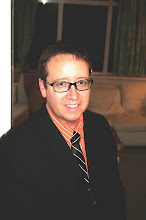
I'm not technically a footnote in "Order Versus Access: News Search Engines and the Challenge to Traditional Journalistic Media," a paper in the November 2007 issue of the journal Media, Culture & Society. I'm more of an endnote. I may not even be that, since I'm embedded in the text.
Well, I'm not embedded in the text. (Right now I'm embedded in my dining room.) But a snippet of my prose is. About halfway through St. Louis University media scholar Matt Carlson's paper is this:
In the face of technological challenges, one columnist reiterated the need for presentational authority:
"There's a lot on [the front page] competing for your attention. Do not consider it a disorganized jumble. In fact, the entire newspaper is an attempt to impose order on the chaos that is our world. There is a rough rule of thumb: The higher up the story is on a page, the more important it is." (Kelly, 2005; C9)
Here, a journalist makes an explicit claim regarding the value of the interpretive actions editors carry out on the news in order to create an interdependent coherent news product. This is viewed as a valuable service that the news provides.
And then when you check the references at the back of the paper it says "Kelly, J. (2005) 'Read (but Not All!) About It,' Washington Post 11 February: C9." That's me! Future scholars will know I existed! Weedy graduate students will stumble across my name and say, "Huh?"
Carlson's paper (in Vol. 29; Page 1014, in case you're wondering) is about how Google News is different from traditional news. In the spectrum of academic papers (and, believe me, I've read a lot of them these last few months) Carlson's falls nearer the "Readable and Interesting" end than the "Impenetrable Gobbledy-Gook" end, even if he does use the words "veridical" and "normative." Of course, I may just have a soft spot for it.
His basic point is that Google News--which is a human-free aggregator of news stories from thousands of sources--upends a newspaper's "presentational authority." As he puts it: "Google is more than simply personalized news. Rather, it explicitly aims to expose users to multiple views on a given topic. This is a contrast from a traditional news product, which aims to provide a singular voice across a range of topics."
What was odd about seeing my column quoted (read the full version here) was the notion that someone was taking me seriously. "One columnist reiterated the need for presentational authority.... Here a journalist makes an explicit claim...." Well, like most columnists, I was just trying to fill a hole in the corner of the paper that day. That's the difference between journalists and academics, and why the latter have something like contempt for the former. We are like mayflies that are born, mate and die in a single day, while they are Galapagos tortoises: methodical and eternal.
Footnotes I Have Known
Actually, my column was entirely appropriate for the point Carlson was making. I love footnotes and regret that I haven't been writing down my favorites. When you see them out of context they have a certain poetry. They're like: "See Finnegan (1978). But also note that Jenkins (1987) observed some colobus monkeys involved in 'prenatal play' activity."
When I did my last fellowship I took a wonderful course on Roman gladiators from Kathleen Coleman. There were some spectacular footnotes in that class, including one in a Coleman paper about modes of execution in the amphitheater. The section was about how a female convict was put to death in ancient Rome in a grotesque recreation of Pasiphae's intercourse with a bull. The footnote was an entertaining little discursion on the bestiality shows once found in places like Tijuana. If I hadn't followed that little number to the end of the paper I would have missed it completely.
Stick It
I attended a great seminar yesterday by Dr. Tammy Boyce, a media analyst from Cardiff University. She examined the British media coverage of the MMR vaccine controversy. That's when a single doctor suggested the measles/mumps/rubella vaccine might be linked to autism. Basically, there was no proof for his supposition and yet the media gave it credence and countless parents decided not to vaccinate their children, or to get three separate inoculations rather than a single combined one.
Boyce divided the blame among all the parties: the media, for covering, then hyping, a story that didn't deserve to be covered in the first place; the government, for not providing adequate experts to knock down the rumors; and parents, for not properly educating themselves. It was a stark reminder that the media's efforts to be "balanced" can sometimes end in disaster. What if there shouldn't be balance?
And then when you check the references at the back of the paper it says "Kelly, J. (2005) 'Read (but Not All!) About It,' Washington Post 11 February: C9." That's me! Future scholars will know I existed! Weedy graduate students will stumble across my name and say, "Huh?"
Carlson's paper (in Vol. 29; Page 1014, in case you're wondering) is about how Google News is different from traditional news. In the spectrum of academic papers (and, believe me, I've read a lot of them these last few months) Carlson's falls nearer the "Readable and Interesting" end than the "Impenetrable Gobbledy-Gook" end, even if he does use the words "veridical" and "normative." Of course, I may just have a soft spot for it.
His basic point is that Google News--which is a human-free aggregator of news stories from thousands of sources--upends a newspaper's "presentational authority." As he puts it: "Google is more than simply personalized news. Rather, it explicitly aims to expose users to multiple views on a given topic. This is a contrast from a traditional news product, which aims to provide a singular voice across a range of topics."
What was odd about seeing my column quoted (read the full version here) was the notion that someone was taking me seriously. "One columnist reiterated the need for presentational authority.... Here a journalist makes an explicit claim...." Well, like most columnists, I was just trying to fill a hole in the corner of the paper that day. That's the difference between journalists and academics, and why the latter have something like contempt for the former. We are like mayflies that are born, mate and die in a single day, while they are Galapagos tortoises: methodical and eternal.
Footnotes I Have Known
Actually, my column was entirely appropriate for the point Carlson was making. I love footnotes and regret that I haven't been writing down my favorites. When you see them out of context they have a certain poetry. They're like: "See Finnegan (1978). But also note that Jenkins (1987) observed some colobus monkeys involved in 'prenatal play' activity."
When I did my last fellowship I took a wonderful course on Roman gladiators from Kathleen Coleman. There were some spectacular footnotes in that class, including one in a Coleman paper about modes of execution in the amphitheater. The section was about how a female convict was put to death in ancient Rome in a grotesque recreation of Pasiphae's intercourse with a bull. The footnote was an entertaining little discursion on the bestiality shows once found in places like Tijuana. If I hadn't followed that little number to the end of the paper I would have missed it completely.
Stick It
I attended a great seminar yesterday by Dr. Tammy Boyce, a media analyst from Cardiff University. She examined the British media coverage of the MMR vaccine controversy. That's when a single doctor suggested the measles/mumps/rubella vaccine might be linked to autism. Basically, there was no proof for his supposition and yet the media gave it credence and countless parents decided not to vaccinate their children, or to get three separate inoculations rather than a single combined one.
Boyce divided the blame among all the parties: the media, for covering, then hyping, a story that didn't deserve to be covered in the first place; the government, for not providing adequate experts to knock down the rumors; and parents, for not properly educating themselves. It was a stark reminder that the media's efforts to be "balanced" can sometimes end in disaster. What if there shouldn't be balance?