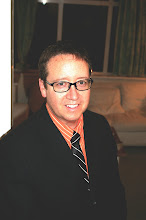
And so last night to a lecture by David Sandalow, a Brookings Institution scholar and author of the book "Freedom From Oil: How the Next President Can End the United States' Oil Addiction." If the lecture had been in the United States I'm sure we all would have fought our way through traffic and jockeyed for a parking space. Since it was in Oxford, the bike racks were full. As it turned out, bicycles aren't among the changes Sandalow thinks we need to reduce our reliance on oil.
That greasy addiction has both environmental and national security ramifications. The oil we burn pollutes the atmosphere and the fact that it bubbles under the ground in not very nice places--Saudi Arabia, Iraq--means that our foreign policy is unhealthily obsessed with those locations.
So, what to do? Here's what Sandalow, a former advisor to President Clinton, said:
1. Broaden our vehicle fleet. The U.S. transportation infrastructure is based overwhelmingly on one thing: the internal combustion engine. Our infrastructure--refineries, gas stations--is set up to support that. But what else can we do? This:
2. Make cars that connect to the electric grid. Electric vehicles don't produce the greenhouse gases that belch from the tailpipes of gas and diesel cars. Hybrid engines are okay, but totally electric is better. (At home in Washington Sandalow drives a Prius retrofitted with lithium batteries.) But doesn't that just move pollution from the vehicle to the power plant? No, he said, because most of our pollution comes from vehicles while electric engines are so efficient that particulates would inevitably be reduced. The big benefit, he said, is plugging electric vehicles in to charge at night, when there is excess capacity in the power grid.
3. Explore biofuels. Sandalow admitted he isn't as keen on this as he once was. Creating ethanol can mean growing corn, which means using fertilizer, which means nitrate run-off, which means dead crabs in the Chesapeake Bay. But biofuel can also be made from switchgrass and other forms of cellulose that don't have as detrimental an environmental impact. At best, biofuels are a "transitional answer," he said.
4. Improve vehicle fuel-efficiency. U.S. automakers should build lighter-weight cars. They should embrace cleaner diesel engines already common in Europe. And, please, do something about 18-wheelers, which go through the air with all the aerodynamicism of a cinder block in a tub of Jell-O.
5. Invest in mass transit and reward telecommuting. Sandalow lamented that it's easier for a community in the U.S. to get government money to widen a road than to build a subway. But as anyone who's ever spent anytime in the Washington area knows, widening roads reduces congestion for about a week, after which everyone flocks to it and it's clogged again. (Widening a road to reduce congestion, Sandalow said, is like widening a belt to lose weight.) He said that working from home has benefits beyond saving oil: Telecommuting workers are happier, more productive workers.
That's a very brief synopsis of an hour-long speech based on a 272-page book. Some in the audience quibbled with some of Sandalow's points--can a U.S. president really promulgate policy that would end Americans' century-long love affair with the internal combustion engine? wouldn't the ExxonMobils of the world resist a turn away from the commodity that has made them rich?--but most seemed to buy his arguments.
China will have to play a role in the global climate change picture--600 new cars registered in Beijing every day, Sandalow said, with very few old ones being scrapped--but America is the key. After years of inaction under President Bush, Sandalow predicted the next president, whomever s/he is, will be committed to addressing global warming and, therefore, the unhealthy fixation the U.S. has on oil.
In my particularly American way I was disappointed that Sandalow didn't promise a technological, magic-bullet solution to all our problems--dialithium crystals for everyone!--but rather was saying that a lot of little things, as well as changes in behavior, would have to be combined to wean us from oil. But, hey, if I can get my hands on a Tesla Roadster, I'm all in favor of electric cars.
After the lecture the crowd was invited, as is Oxford tradition, to a reception. The lecture, sponsored by the James Martin 21st Century School at the university, was at the Museum of Natural History. As I sipped champagne and nibbled duck pancakes, I couldn't help but reflect on the aptness of the setting: On display all around us were the skeletons of dinosaurs, animals whose very skin and bones had turned to oil millennia ago. Dinosaurs, you will recall, are extinct.