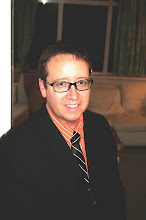
So, if certain technical hurdles can be overcome I will, before summer's end, be blogging on washingtonpost.com. The first hurdle, however, is coming up with a name. Will you help me?
Obviously "John Kelly's Voxford" isn't gonna fly. But "John Kelly's Washington" is no good either, since the aim is to distinguish the blog from my column of that name. Taking a cue from Voxford I could go with "John Kelly's Vashington," but that just sounds like a vampire pronouncing it. ("I vant to suck your blood. And read your blog.")
It'd be nice to go with something involving my name. I wasn't crazy at first about Post columnist Marc Fisher's blog's name: Raw Fisher. It seemed unsanitary, like an improperly cleaned cutting board. But it's grown on me and now I think it's among the best on our site. Joel Achenbach probably hated his last name as a kid (it sounds like a German trying not to vomit) but it came in helpful when it was time to dub the Achenblog. I don't really have a name that lends itself to that sort of transformation. "Kelly's Heroes"? "Kelly Roll"? "A John-diced View"? I kind of like "Johnorrhea" (catch it!) but that's even grosser than "Raw Fisher."
So, maybe something that doesn't include my name but that hints at what the blog is about, which will be tidbits from the Washington area and from my own brain pan. But call it something like "Capital Comment" and people will think it's about politics, which it won't be.
Oh well, that's enough dithering over what it shouldn't be. Tell me what it should be. Or what it might be. We're brainstorming here, folks, so all suggestions are appreciated. Leave 'em as a comment or drop a line to kellyj[at]washpost.com. If I pick yours you will receive some sort of probably worthless prize, in addition to my undying digital gratitude. Have a great weekend.
Showing posts with label bloggers. Show all posts
Showing posts with label bloggers. Show all posts
Friday, 18 July 2008


Monday, 5 May 2008
New Media Killing Journalism: Yes or No?

Up early and down to the Frontline Club in London Friday for a World Press Freedom Day event sponsored by UNESCO. It took the form of an “Oxford Union-style” debate. OU-style means a gimmicky sort of thing where participants must argue for or against the motion, in this case “New media is killing journalism.” Wow, killing journalism. That’s pretty severe. Whoever could they get to speak in favor of that?
How about the self-described "antichrist of Silicon Valley”? That’s what it says on Andrew Keen’s business card. I’d been wanting to meet the author of “The Cult of the Amateur: How Today’s Internet Is Killing Our Culture." His book is an entertaining polemic, though in the margins of my copy I kept scribbling "So what?" Also arguing for the motion was Kim Fletcher, a former editor of the Telegraph and the Independent on Sunday. Against the motion were the BBC’s Robin Lustig, host of “The World Tonight” (with a blog of his own) and Nazenin Ansari, diplomatic editor of Kayhan (London), a weekly Persian language newspaper.
Keen spoke first. A bit of a slow starter, one of the points he wanted to make was that journalism is a collection of facts “for which one is paid.” Web 2.0 threatens that. People no longer put a premium on content from brand-name providers. They’d rather rely on the recommendations of their friends, as information is passed around endlessly online.
The future, he said, belongs to things like the Huffington Post, the unpaid blogorama which he says gets as many page views as the New York Times. (Can that be true?)
Lustig celebrated the ubiquity of journalism thanks to new media. Not only can you find him everywhere (courtesy of the web), you can find little snippets of information that would have taken days to unearth before. Fletcher admitted that it seemed crazy to think anyone could be against new media, and yet it was undermining the economics of journalism. He hates the term "user-generated content," since it calls to mind a "bucket of stuff" that can be slapped online. Ansari said that online newspapers such as hers, and the work of courageous bloggers living under repressive governments, show the power and necessity of new media.
I was among the “named speakers.” These were people salted in the audience who prepared remarks in advance to deliver when called upon by the moderator, in this case William Horsley, former BBC broadcaster and chair of the Association of European Journalists. I'd been instructed to start my comments in Oxford Union style, thus: "Mr. Chairman, I oppose this motion... because I hate to see my fellow journalists fall prey to the same sort of victim mentality that we quite rightly criticize when it's adopted by other industries that have failed to keep pace with changing times." Then I blathered for a couple more minutes.
LES's Charlie Beckett (below right) got to take a few swings at the motion too, noting that it isn't journalists that need to be saved, but journalism. And that means sharing the power to create something more valuable. Ashley Norris (below left), a former Guardian writer who founded a stable of blogs, said it's no wonder new media rose up to threaten journalism: People became fed up with a journalism that acted superior and non-responsive. Magazines are especially bad, he said. Before long it looked like the motion might have been "New media should kill journalism."

One audience member said journalism could be saved if corporate directors weren't so intent on lining their pockets and those of their shareholders, rather than reinvesting in the product. Someone else noted that new media helps facilitate a race to the bottom, as mainstream news organizations ape the tabloid styles of blogs and celebrity-obsessed web sites.
Keen tried to turn the discussion away from notions of free speech and the exploits of brave bloggers. He is essentially focused on the West and, like Fletcher, sees the issue as an economic one. There are also questions of authority. New media means that the "expert" is no longer valued and Keen urged journalists to "liberate yourselves from humility." He added: "I guarantee we will lose this debate. You will see new media as a good thing."
He was right. When the votes were counted, 13 people had voted for the motion, 43 against it and five had abstained. The motion was a bit of artifice--baby, meet bathwater--and I don't know if anyone there had his or her mind changed.
Changed, probably not. Broadened, perhaps. I have some sympathy for Keen's position (he warmed up eventually). And when he talked about how everyone is an expert these days, picking and choosing their "news" and their "facts" from their Facebook widgets and their world wide avalanche, I had a thought: Will that put even more of a premium on knowledge and "the truth," creating an ever-more Darwinian process by which those who can access, process and understand the news will prosper, while those who can't don't. I can sort of see it going either way: The web democratizes and educates so much that you needn't subscribe to the New York Review of Books or sip cherry coke with Warren Buffet to prosper. Or the web throws so much garbage into the atmosphere that only those inclined to hunt and peck--by dint of their education or elite status--are rewarded.
There's a much better write-up of the debate at Nico Macdonald's blog and the video will eventually be up on the Frontline Club's website.
Wednesday, 30 April 2008
Sky Larking: Don't Adjust Your TV

My humble little blog doesn’t attract much attention. I like to think of it as appealing to a small but select readership, a readership that, to be honest with you, typically numbers in the low three digits—the very low three digits. Still, every writer dreams of a larger audience so when a producer from SkyNews asked me to appear on one of their programs, I had to say yes. She’d seen my Guardian essay and, given that she has the unenviable task of finding a new blogger to appear nearly every night, she’d asked me if I was game.
I was to appear on a segment that looks at stories that are “moving up the web.” I don’t know what particular criteria they use to select the stories—is the web vertical, up which things may move?—but I didn’t have to. They would provide me with five links, I’d look at them long enough to have a rough grasp of the topic, then I’d sit across from a presenter and blurb the sites while graphics played across TV screens around Britain. They’d also run my blog’s address, thus increasing the chances that some shut-ins might wash up here at Voxford.
I’ve been on American TV before (mostly the rarely-seen NewsChannel 8 but also, very early in my career, the CBS Evening News) but British TV was new territory. I spent 40 bucks of my own money and splurged on the fast train to Paddington, where a silver Mercedes sedan was waiting to whisk me to SkyNews’s west London headquarters.
The driver was from Iran. He was 15 when he left that country, traveling with a forged Yugoslavian passport and hoping to end up in the most Iranian of American cities, Los Angeles. (“Tehrangeles,” he called it.) But he was caught in Britain and this is where he’s been for the last 20 years. He said he’s never gotten used to the rain.
We had a lot of time to talk. Traffic was awful and it took us nearly an hour to navigate the drizzly back roads of London and arrive at Sky. A runner met me in the lobby and took me to the makeup room.
NewsChannel 8 doesn’t do makeup, so this was a first. Well, a first since my acclaimed performance in “You Can’t Take It With You” in 12th grade. “How long are you going to be on for?” asked the makeup lady. "Not long," I answered. "About three minutes." It turns out they don’t use the good airbrush-applied makeup if you’re only going to be on for three minutes. She used a camel’s hair brush, dabbing powder on my macrocephalic forehead until it had stopped shining like a signal mirror. She did my whole face—ears too.
“What’re you talking about?” she asked.
“Um, the web,” I answered.
“The world wide web? Oh, of course,” she said. “Today’s the 15th anniversary of when it was invented.”
Really? Somehow I’d missed that. Maybe that’d be good to work in, I thought. “Can I ask where you heard that?” I said, suddenly worrying that a SkyNews makeup lady might not be the best source.
“I saw it on TV somewhere,” she said.
I looked better with makeup on—not so shiny, little blemishes gone, my red and vaguely disturbing complexion obscured—but I’m not sure I approve of it. All the TV newsreaders in England—the white ones, anyway—look the same, with a sort of matte plastic appearance. I guess the viewing public would be horrified by a zit or the riverine sprawl of a varicose vein, but the makeup looks so fake that I have to wonder why they don’t just wear a kabuki mask.
Or use an avatar. See, the first story moving up the web was something about avatars. It was also the toughest one for me to explain, since I don’t really know from avatars and the story was based on some research at Stanford University, research described in a dense journal article I’d read on the train.
I went to the Green Room and re-read the notes—the script, really—that I’d written. How much detail should I go into? What if host Martin Stanford asked about the research methodology of the Stanford experiment? There was also an item on a huge pig balloon lost during an outdoor Roger Waters concert in California. I’d be okay if he asked what song had been playing when the balloon became untethered (“Pigs”) but I’d be sunk if he asked me to sing it or hum the melody. And no way could I pronounce “lysergic acid diethylamide”—aka LSD—the discoverer of which had just died.
The floor manager wired me with a microphone and escorted me to the set. I've learned a lot of things about TV and the most important one is that it's impossible for a newspaper person to look good on it. TV people sit with an erect carriage, they know how to hold their head and not to cross their legs. It's actually hard to do it right, which is why newspaper people look so awful. I am resigned to this and so I tried to get comfortable.
The other thing about TV--at least the sort I've been asked to do--is that it moves quickly. I'd barely gotten into the avatar item when it was time to move on to the dead LSD inventor. Oops, I'd forgotten to mention that the Stanford researchers call their theory the "Proteus Effect." Oh well. After LSD came Roger Waters's pig. I got my Obama joke in, but just barely. Barely time to address the Texas bonehead who tried to cash a $36 billion check or the Wisconsin paper that has migrated to the web.
One of the problems of going on TV is that TV people never seem to be paying attention to what you're saying. The same thing applies to radio. When I used to be on David Burd's WTWP program on Saturdays he was forever twisting dials, cueing up sound effects, seeing which callers were on hold--all while I was talking. Was he even listening? Yes, as it turns out. Martin was too, able to extemporize even though it seemed like he didn't even know I was there. This kind of multitasking is as vital to a TV person as knowing how to sit up straight.
And then it was over. The same Iranian driver whisked me back to Paddington and I boarded the 20:51 to Oxford. I arrived back home at 10 p.m., five hours after I'd left for my three minutes of television.
How did I do? See for yourself. The video isn't up yet, but it should be soon. And in the unlikely event that you've come to my blog because you saw me on SkyNews, thanks for making the trip.
Tuesday, 29 April 2008
'SuperMedia': Can Charlie Beckett Save Journalism?
I was at a gathering the other day where the host asked for a show of hands: "How many of you read blogs?" The audience numbered about 30, including many worthy journalists. Four hands, including mine, went up. Twenty-six people glared at us as if we'd just confessed to an unhealthy infatuation with donkeys. "Blogs," they were thinking. "Ugh. How can you read those sleazy digital compendia of slime and vitriol?"
It's the sort of attitude that drives me crazy and makes me want to storm the battlements of the mainstream media, pitchfork in one hand, flaming torch in the other. Then I remember that sitting at a desk on the other side of the battlements is, um, me. I like me enough that I don't want to set me on fire.
Eight months ago I came to Oxford to study citizen journalism and while I've learned a lot I'm not sure I've decided anything. I'm disgusted by the sclerotic worshippers of journalism's "Golden Age" who see nothing but rack and ruin in digital technology. But I'm equally disgusted by the techno-evangelists who keep promising a glorious future automagically assembled from the "wisdom of the crowds."
A new book by the LSE's Charlie Beckett falls into neither camp, though I'm not sure it's a total success, either. "SuperMedia: Saving Journalism So It Can Save the World" starts by sketching the tale of economic woe that faces the news media these days. Losing money (or not making as much as we once did), losing audience, losing respect--these are bad things. But they're counterbalanced by advances in technology that in some ways make journalists' jobs easier, make us able to reach more people. And these people--famously dubbed the "former audience" by proselytizer Dan Gillmor--want to get involved. Involving them is part of what Beckett calls "networked journalism." He writes:
Beckett is vague on exactly how networked journalism can be applied. He admits he's more interested in "the dynamics than the details." Thus "SuperMedia" is more manifesto than instruction manual. Because of that, it's sometimes hard to assess the claims he makes for networked journalism. The phrase is invoked so often that it starts to sound like a miracle drug or an all-purpose stain remover. News media losing its way? Try networked journalism! Citizens don't care about politics? Try networked journalism!
I worry about some of the practical considerations of networked journalism: How, on deadline, can a reporter involve an audience? (Especially if, as Nick Davies claims in his new book, "Flat Earth News," that reporter is being pushed to produce ever more stories.) What's to stop elites from dominating the conversation once they're invited over the battlement's walls? Have we, as Adrian Monck might argue, mis-framed the problem entirely?
Still, Beckett has made a valuable contribution to the dialogue. The message I decided to take from "SuperMedia" was this one: Journalism has evolved over time. There is nothing wrong with it changing again. It's a message I wish those 26 people who didn't raise their hands would take to heart. (In the year 2008 it's journalistically irresponsible not to cast as wide a net as possible for information. And it's stupid not to spread your product as widely as you can, however you can.) As Beckett writes:
As for whether it will actually make a difference, that remains to be seen.
It's the sort of attitude that drives me crazy and makes me want to storm the battlements of the mainstream media, pitchfork in one hand, flaming torch in the other. Then I remember that sitting at a desk on the other side of the battlements is, um, me. I like me enough that I don't want to set me on fire.
Eight months ago I came to Oxford to study citizen journalism and while I've learned a lot I'm not sure I've decided anything. I'm disgusted by the sclerotic worshippers of journalism's "Golden Age" who see nothing but rack and ruin in digital technology. But I'm equally disgusted by the techno-evangelists who keep promising a glorious future automagically assembled from the "wisdom of the crowds."
A new book by the LSE's Charlie Beckett falls into neither camp, though I'm not sure it's a total success, either. "SuperMedia: Saving Journalism So It Can Save the World" starts by sketching the tale of economic woe that faces the news media these days. Losing money (or not making as much as we once did), losing audience, losing respect--these are bad things. But they're counterbalanced by advances in technology that in some ways make journalists' jobs easier, make us able to reach more people. And these people--famously dubbed the "former audience" by proselytizer Dan Gillmor--want to get involved. Involving them is part of what Beckett calls "networked journalism." He writes:
Networked Journalism is a description and an aspiration. It reaffirms the value of the core functions of journalism. It celebrates the demand for journalism and its remarkable social utility. But it insists on a new process and fresh possibilities. It means a kind of journalism where the rigid distinctions of the past, between professional and amateur, producer and product, audience and participation, are deliberately broken down. It embraces permeability and multi-dimensionality. Networked Journalism is also a way of bridging the semantic divide between Old and New Media.
Beckett is vague on exactly how networked journalism can be applied. He admits he's more interested in "the dynamics than the details." Thus "SuperMedia" is more manifesto than instruction manual. Because of that, it's sometimes hard to assess the claims he makes for networked journalism. The phrase is invoked so often that it starts to sound like a miracle drug or an all-purpose stain remover. News media losing its way? Try networked journalism! Citizens don't care about politics? Try networked journalism!
I worry about some of the practical considerations of networked journalism: How, on deadline, can a reporter involve an audience? (Especially if, as Nick Davies claims in his new book, "Flat Earth News," that reporter is being pushed to produce ever more stories.) What's to stop elites from dominating the conversation once they're invited over the battlement's walls? Have we, as Adrian Monck might argue, mis-framed the problem entirely?
Still, Beckett has made a valuable contribution to the dialogue. The message I decided to take from "SuperMedia" was this one: Journalism has evolved over time. There is nothing wrong with it changing again. It's a message I wish those 26 people who didn't raise their hands would take to heart. (In the year 2008 it's journalistically irresponsible not to cast as wide a net as possible for information. And it's stupid not to spread your product as widely as you can, however you can.) As Beckett writes:
Networked Journalism is a return to some of the oldest virtues of journalism: connecting with the world beyond the newsroom; listening to people; giving people a voice in the media; responding to what the public tells you in a dialogue.
As for whether it will actually make a difference, that remains to be seen.
Tuesday, 22 April 2008
Hey There Delilah: Shirt Happens

Cable news giant CNN appears to be testing a new feature that will allow you to order a T-shirt emblazoned with a headline from its web site. The beta site is already attracting the derision of bloggers. I was prepared to heap abuse on poor CNN myself, but then I paused. Why shouldn't people be able to order a T-shirt that has a CNN headline on it?
The gleeful scorn with which some bloggers met the CNN T-shirt news is unseemly for a few reasons. The first is that most of these bloggers who are calling the CNN shirts lame already wear lame T-shirts. They probably have drawers-full of 100 percent cotton Hanes Beefy Ts with lolcatz, "Zero Wing" and other ironic sayings on them. Second, the underlying premise of the Internet--the one most vigorously embraced by most bloggers--is that you can do anything. You can find anything, post anything, download anything. The web is ancient Rome, baby, and we're all Caligula. You want to pirate "Silver Surfer," upload a video clip of your roommate barfing, sleep with your sister and make your horse a consul, go ahead! But let poor CNN dabble with a T-shirt and suddenly it's "the death of broadcast journalism."
If CNN goes through with this--and it appears that some of its beta T-shirt web site has already been taken down--I can guarantee you that first in line to buy the shirts will be spittle-spewing bloggers who will defend their purchases by arguing that they wish to wear their chemises in an ironic, post-modern way.
Pest in Show
Some of the bloggers say the shirts will be lame because CNN.com's headlines are lame. Okay, there's something to that. But all news web site headlines are lame. They're designed to be read by machines, not humans, an attempt to achieve maximum Googlage and linkage. I was told that to increase traffic to my blog I should use straightforward headlines. But simple, boring headlines leave me so cold that I opt instead for inscrutable ones like today's, which will guarantee no one but adolescent girls and dyslexic "Forrest Gump" fans find me.
Anyway, everyone knows the best news headlines are on tabloids. The New York Post's "Headless Body in Topless Bar" and the Sun's "Freddie Starr Ate My Hamster" are classics of the genre.
The British are also good at writing "news bills," those advertising signs outside of news agents and tobacconists. Here's one I snapped this morning:

The problem arises when you don't put the sign in its holder correctly:

An "ex pest?" Well what's the problem then?
Monday, 15 October 2007
The Future of Newspapers?
As I've done every day since I moved to Oxford, yesterday morning I walked my dog, bagged and disposed of his poop, then stopped at the newsagent's to buy a paper.
When I got home, I sat on the couch and started to read it (the newspaper, not the dog). Suddenly, I was overcome by a wave of shame, as I heard the catcalls of smartypants media bloggers:
"Oh. My. God. You're reading a newspaper? That's dead trees, ya know? And, how quaint. You're on a couch! You're sitting on something analog! I bet you're 'drinking coffee' from a 'mug' too! Luddite! I'm suspended in mid-air, sucking argon through a carbon-fiber ventilator while downloading Slashdot directly to my hippocampus! And I'm Twittering."
My vision was the result of the kerfuffle over a recent posting by the Poynter Institute's Roy Peter Clark, in which he suggested that it's the duty of every journalist to buy the newspaper. I don't know Roy Peter Clark, and I'm naturally suspicious of anyone whose moniker consists of three first names, but I'm amazed at the abuse that's being heaped on the guy.
An "Internet troll" says one Steve Yelvington, who opines: "There's nothing wrong with paper. It's your journalism that isn't relevant." Jokes Mark Potts: "Wait, I've Got Another Idea--Let's Have a Bake Sale!" "Wrong-headed" says my friend Craig Stoltz, who recommends journalists steal papers from street boxes to "help destroy the hulking structure" that stands in the way of our bright digital future. Cynthia Brumfield writes "Paper is an inefficient method of delivery and has been supplanted by virtually costless digital distribution." (Guess what: No it isn't and no it hasn't.)
I've been reading these bloggers for a while so I'm accustomed to the spittle-flinging glee they exhibit every time newspapers make a "mistake." The weirdest thing is the bitter tinge to these comments. There's a creepy sort of Oedipal thing going on. They really seem to hate newspapers and the people who create them. Dude, I want to ask, what did a newspaper ever do to you? Beat you up and take your lunch money? Turn you down for a date to the prom?
Here's the reason I think journalists should subscribe to a newspaper: not to "save" the industry or as some noble gesture. If you work at a newspaper you should subscribe to it because it's your god-damned product. If you seriously think it's doomed--if you think spending 35 cents a day contributes to some mass hysteria that afflicts only newspaper publishers, or "enables" editors the way a slice of rum cake enables Owen Wilson--then quit.
If you're embarrassed that your product is produced the same way as the Gutenberg Bible, then go start your Backfence.com. Go see if hyperlocalnewswithintherangeofmyvision.com or you-be-the-editor.net are hiring. (Go work at the Gap, even. But the minute you start mouthing off about how bricks-and-mortar retail is stoopid I hope you'll have the decency to give your notice there, too.)
Yes I understand that newspapers are in the information business, not the tree-recycling business. I know that circulation is down everywhere. I agree that the World Wide Web might just catch on. But do these hyperventilating bloggers seriously believe that simply because the perfect social media/web cam/citizen journalism/FaceBook-compatible widget hasn't been introduced all editors and publishers are just sitting on their asses waiting to turn off the lights?
No one knows what's going to happen in the future, not even people who know the difference beween RSS and CSS. Actually, I do know what will happen in the future: Tomorrow morning I'm going to walk my dog and buy a newspaper. And I'm not going to feel guilty about it.
When I got home, I sat on the couch and started to read it (the newspaper, not the dog). Suddenly, I was overcome by a wave of shame, as I heard the catcalls of smartypants media bloggers:
"Oh. My. God. You're reading a newspaper? That's dead trees, ya know? And, how quaint. You're on a couch! You're sitting on something analog! I bet you're 'drinking coffee' from a 'mug' too! Luddite! I'm suspended in mid-air, sucking argon through a carbon-fiber ventilator while downloading Slashdot directly to my hippocampus! And I'm Twittering."
My vision was the result of the kerfuffle over a recent posting by the Poynter Institute's Roy Peter Clark, in which he suggested that it's the duty of every journalist to buy the newspaper. I don't know Roy Peter Clark, and I'm naturally suspicious of anyone whose moniker consists of three first names, but I'm amazed at the abuse that's being heaped on the guy.
An "Internet troll" says one Steve Yelvington, who opines: "There's nothing wrong with paper. It's your journalism that isn't relevant." Jokes Mark Potts: "Wait, I've Got Another Idea--Let's Have a Bake Sale!" "Wrong-headed" says my friend Craig Stoltz, who recommends journalists steal papers from street boxes to "help destroy the hulking structure" that stands in the way of our bright digital future. Cynthia Brumfield writes "Paper is an inefficient method of delivery and has been supplanted by virtually costless digital distribution." (Guess what: No it isn't and no it hasn't.)
I've been reading these bloggers for a while so I'm accustomed to the spittle-flinging glee they exhibit every time newspapers make a "mistake." The weirdest thing is the bitter tinge to these comments. There's a creepy sort of Oedipal thing going on. They really seem to hate newspapers and the people who create them. Dude, I want to ask, what did a newspaper ever do to you? Beat you up and take your lunch money? Turn you down for a date to the prom?
Here's the reason I think journalists should subscribe to a newspaper: not to "save" the industry or as some noble gesture. If you work at a newspaper you should subscribe to it because it's your god-damned product. If you seriously think it's doomed--if you think spending 35 cents a day contributes to some mass hysteria that afflicts only newspaper publishers, or "enables" editors the way a slice of rum cake enables Owen Wilson--then quit.
If you're embarrassed that your product is produced the same way as the Gutenberg Bible, then go start your Backfence.com. Go see if hyperlocalnewswithintherangeofmyvision.com or you-be-the-editor.net are hiring. (Go work at the Gap, even. But the minute you start mouthing off about how bricks-and-mortar retail is stoopid I hope you'll have the decency to give your notice there, too.)
Yes I understand that newspapers are in the information business, not the tree-recycling business. I know that circulation is down everywhere. I agree that the World Wide Web might just catch on. But do these hyperventilating bloggers seriously believe that simply because the perfect social media/web cam/citizen journalism/FaceBook-compatible widget hasn't been introduced all editors and publishers are just sitting on their asses waiting to turn off the lights?
No one knows what's going to happen in the future, not even people who know the difference beween RSS and CSS. Actually, I do know what will happen in the future: Tomorrow morning I'm going to walk my dog and buy a newspaper. And I'm not going to feel guilty about it.
Subscribe to:
Posts (Atom)